
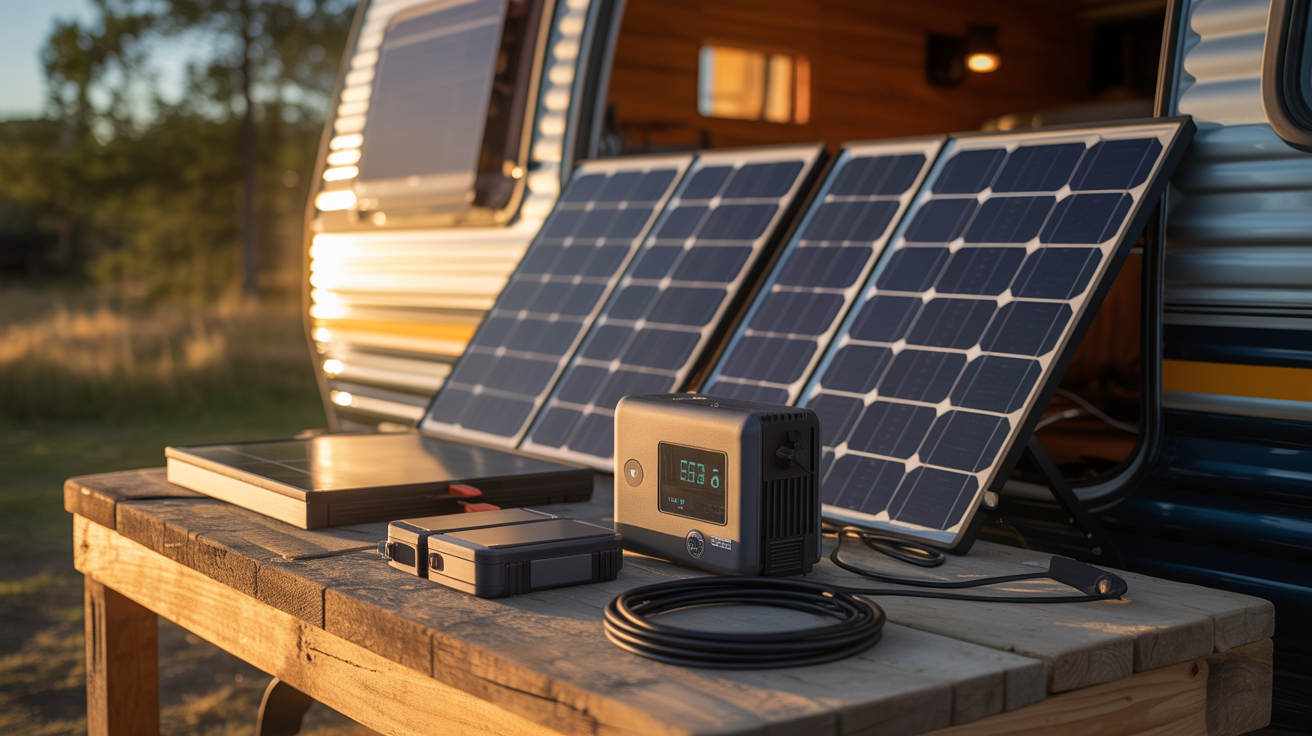
Let’s talk about solar panel kits. Maybe you’re sick of the electric bill. Or you want power in your RV without the generator roar. Perhaps you need the fridge to stay on when the grid goes down. A solar panel kit is your starting point. It’s a box of freedom.
A collection of parts that turns sunlight into usable power for your life. But which kit? For what? The market is a jungle of watts, volts, and bold promises. This guide will cut through the noise. We’ll walk through the best solar panel kits for RVs, essential camping solar kits, and robust setups for your shed or cabin.
We’ll explain what a solar panel kit with battery and inverter actually does. You’ll learn how to choose a solar panel kit, how to install it, and the real solar panel kit cost. Let’s get into it.
Top 10 Popular Solar Panel Kits: Configurations & Fitting Guide
Complete breakdown of popular solar panel kits with technical specifications and installation recommendations
| Rank | Kit Name | Configuration Details | Key Features | Primary Fitting Purpose |
|---|---|---|---|---|
| 1 | EcoWatt 4000W Premium Kit |
|
|
Residential Rooftop Installation |
| 2 | SunMaster Off-Grid 3000W |
|
|
Remote Cabins & Off-Grid Living |
| 3 | SolarFlex Portable 200W Kit |
|
|
RV, Camping & Mobile Use |
| 4 | GridGuard 6000W Hybrid System |
|
|
Whole-Home Backup Power |
| 5 | PanelSet 800W Balcony System |
|
|
Apartment Balconies & Rentals |
| 6 | FarmPower 10kW Ground Mount |
|
|
Agricultural & Field Installation |
| 7 | BoatPro Marine 160W Kit |
|
|
Marine & Boat Applications |
| 8 | ShedLight 120W Basic Kit |
|
|
Sheds, Workshops & Small Structures |
| 9 | BusinessPro 15kW Commercial Kit |
|
|
Commercial Rooftop Projects |
| 10 | VanLife 400W Mobile System |
|
|
Van Conversions & Mobile Homes |
Finding Your Perfect Match: Kits Sorted by Your Life
Don’t just buy a generic “solar panel kit.” The right kit fits your life like a good pair of boots. A kit for a boat is different from a kit for a cabin. Here’s the breakdown.
For the Road: RV and Van Life Solar Kits
Life on wheels needs smart power. An RV solar kit isn’t a luxury anymore; it’s a necessity for real boondocking. You’re not just charging phones. You’re running lights, a vent fan, maybe a laptop and a TV. A 200-watt solar panel kit is a sweet spot here.
It’s enough to top up your batteries daily. The key for vans and RVs? A complete solar panel kit with a charge controller. You need that brain to manage the power flow. I once saw a friend hook panels straight to a battery. The smell of cooked battery acid is unforgettable.
And not in a good way. For vans, thin, flexible panels are king. They sit flat on the roof without catching the wind.
For the Water: Marine Solar Kits
A solar panel kit for a boat fights a harsh environment: salt, spray, and constant vibration. Marine-grade kits use corrosion-resistant connectors. They’re built tough. The goal is to keep your starting battery healthy or power small electronics.
A 100-watt solar panel kit often does the trick. It’s about maintenance, not running air conditioning. I remember a sailor in the marina. His cheap panel corroded in a season. His fridge died. He learned the hard way: marine means specific parts.
For the Backyard: Shed, Cabin, and Off-Grid Kits
It is where solar gets serious. A solar panel kit for a shed might power lights and tools. A solar kit for a cabin might run everything. It often requires a solar panel kit for a home with battery storage. We’re talking power tools, a well pump, and a refrigerator.
For a small cabin, a 400-watt solar panel kit could be the foundation. You need an inverter to make AC power. You need a big battery bank to last through the night. It is true energy independence. It’s more complex, but the reward is huge: a lit, powered space far from any power line.
For Adventure: Camping and Backpacking Kits
Portability is everything. A foldable solar panel kit is your best friend here. You unfold it at camp, plug in a power bank, and you’ve got juice for GPS, headlamps, and cameras.
A backpacking solar kit needs to be light—often just a 10-20-watt panel that straps to your pack. It’s not for high power; it’s for keeping essentials alive. Forget running a blender. It is about staying connected and safe.
For the “What If”: Emergency Preparedness Kits
When the grid fails, panic rises. A solar panel kit for emergency preparedness brings calm. It’s insurance. The new trend? Solar generator kits. These are all-in-one boxes: a battery, an inverter, and ports, paired with a folding solar panel.
You pull it out, unfold the panel, and you have power for medical devices, comms, and lights. No gas, no noise. After a big storm, the real value of this kit hits home. It’s not just power; it’s peace of mind.
What’s in the Box? Understanding Kit Components
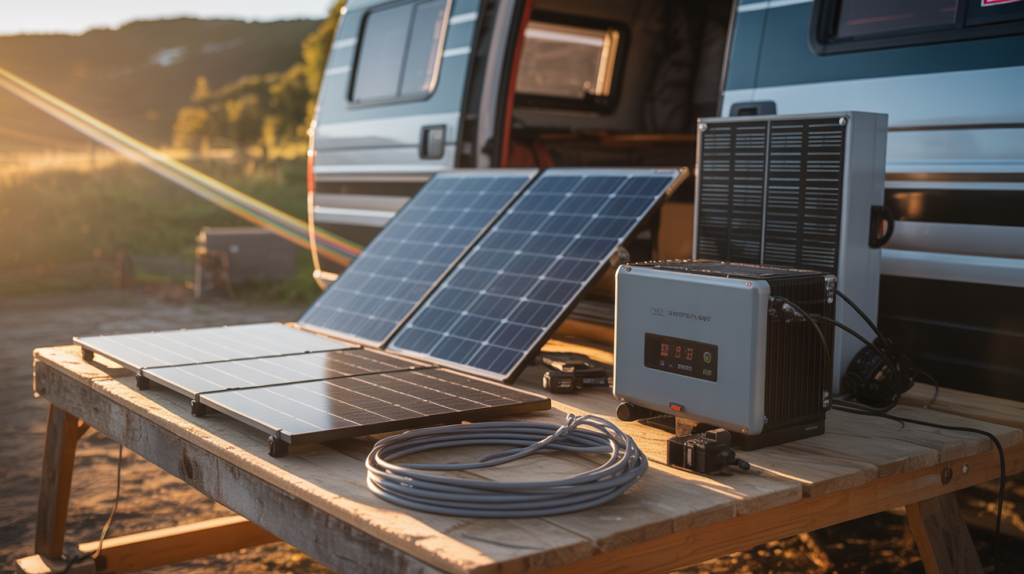
A solar panel kit is a puzzle. You need to know the pieces. Every piece matters. A missing piece means a non-working system.
The Heart: Solar Panels (The Watts)
It is what captures the sun. They’re rated in watts (W). A 100-watt solar panel kit is an entry point. A 200-watt solar panel kit is more capable. A 400-watt solar panel kit is for bigger needs. More watts means more potential power, but only if you have the rest of the system to handle it.
Panel types matter. Monocrystalline panels are efficient and space-smart. Polycrystalline panels are cheaper but need more roof space.
The Brain: The Charge Controller
If you get a solar panel kit with a charge controller, you’re on the right track. This device sits between the panels and the battery. It prevents overcharging. It’s absolutely critical.
Using a panel without one is like pouring water into a glass with no bottom. MPPT controllers are the gold standard—they squeeze up to 30% more power from your panels, especially in cool or cloudy weather.
The Bank: The Battery
Panels make power when the sun shines. You need a battery to use it at night. A solar panel kit with battery and inverter is called a “complete kit.” The battery stores the energy. Deep-cycle batteries are made for this daily charging and draining. Lithium batteries are lighter, last longer, and are worth the investment for serious use.
The Translator: The Inverter
Batteries and panels deal in Direct Current (DC). Your gadgets and fridge use Alternating Current (AC). The inverter does the translation.
A solar power kit meant for household items must include an inverter. Its size (measured in watts) determines what you can run. Want to power a refrigerator? You’ll need a sufficiently large inverter in your kit.
The New Kid: Solar Generator Kits
It simplifies everything. A solar generator kit is an all-in-one portable power station plus a solar panel. The “generator” is just a big lithium battery with a built-in inverter and charge controller. You plug the panel into it. It’s idiot-proof, quiet, and perfect for emergencies, camping, or backup power. It’s the easiest way to start.
Making It Work: How to Choose, Size, and Install
It is the practical part. The “how-to” that moves you from dreaming to doing.
How to Choose a Solar Panel Kit
First, be honest about your needs. Make a list of what you want to power. A laptop? A fridge? A light bulb? Find their wattage. Add it up. That’s your starting point. Second, think about your location. A kit in sunny Arizona will outperform the same kit in cloudy Washington.
Third, consider your budget. The solar panel kit price ranges from a few hundred to several thousand dollars. A good DIY solar panel kit for an RV might cost $600-$1200. A full cabin system can be $3000+. Remember, the kit is often just the start. You might need cables, mounts, and tools.
How to Size a Solar Panel Kit
Sizing is about balance. You balance energy creation (panels) with energy storage (battery) with energy use (your appliances). It’s a math problem. For example, a 200-watt solar panel kit in good sun might produce 800-1000 watt-hours per day.
What can that power do? It could run a medium, efficient refrigerator for part of the day and keep some lights on. But if you add a microwave and a coffee maker, you’ll drain it fast.
What can a 200-watt solar panel kit power? Realistically: LED lights, fans, charging devices, and a small TV for hours. It likely can’t run a large AC unit or an electric heater. Those are power hogs.
How to Install a Solar Panel Kit
Safety first. Turn everything off. Work methodically. Most complete solar panel kits come with a manual. Follow it. The general flow is: 1) Mount the panels securely (on a roof, ground, or pole). 2) Run the wiring from the panels to the charge controller.
Use the right gauge wire to prevent loss. 3) Connect the charge controller to the battery. 4) Connect the inverter to the battery. 5) Turn it on and test.
The hardest part is often the physical mounting and clean wiring. Take your time. A sloppy install leads to problems later. If you’re unsure, hire an electrician for the final connections. It’s worth it.
The Big Questions: Cost, Value, and Grid-Tied vs. Off-Grid
Let’s tackle the doubts head-on.
Are Solar Panel Kits Worth It?
The answer is a solid “it depends.” For an RVer who boondocks? Absolutely. The kit pays for itself in campground fees and generator fuel. For emergency backup? Without a doubt.
For trying to power your entire grid-tied house? Probably not. The value is in specific, off-grid applications. They are worth it for freedom, resilience, and power where there is none.
Solar Panel Kit Cost vs. Value
The solar panel kit cost can be a shock. A decent RV kit is $800. A big cabin system is $4000+. Compare that to the value. No more power outages. No more generator noise. No more utility bills for that shed. The cost is upfront. The value lasts for 20+ years on the panels, 5-10 on batteries. It’s an investment in self-reliance.
Solar Panel Kit vs Grid-Tied System
It is crucial. A solar panel kit is usually a standalone, off-grid system. It powers your stuff directly. A grid-tied system hooks into your utility. It offsets your bill and often sends power back to the grid. Kits are simpler, portable, and work when the grid is down.
Grid-tied systems are more complex, require permits and inspections, and usually shut off during a blackout (unless you have a special battery). Kits are for DIY power islands. Grid-tied is for whole-house electricity bill reduction.
The Bottom Line: Your Power, Your Rules
A solar panel kit is a tool. A powerful one. It’s not magic. It requires understanding your needs, your location, and a bit of upfront work. Start small if you need to. A portable solar panel kit for camping is a low-risk way to learn. Then scale up.
The technology is here. It’s reliable. And it puts you in control. Whether it’s for your RV, your boat, your cabin, or your peace of mind during a storm, there’s a kit that fits. Do your math. Choose quality components. Install it carefully.
Then enjoy the quiet hum of your fridge, powered by nothing but sunlight. That feeling never gets old. Ready to start? Look at your energy needs today. That’s your first step toward energy independence.
FAQs About Solar Panel Kits
1. What is included in a typical solar panel kit?
A good kit includes the solar panels, a charge controller, wiring/connectors, and mounting hardware. A complete solar panel kit with battery and inverter will also include the energy storage (battery) and the device (inverter) to convert the power for your household appliances.
2. Can I use a solar panel kit to power my entire house?
It’s very challenging and expensive to power an entire, average grid-tied house with a standard off-grid solar panel kit. These kits are best for specific applications like RVs, cabins, sheds, or essential home backup. For whole-house power, you’d need a very large, custom-designed system, often grid-tied with utility approval.
3. How long does it take to install a DIY solar panel kit?
For a competent DIYer, a simple roof-mounted RV solar kit or shed kit can take a weekend. It includes mounting, wiring, and connections. A more complex, whole-cabin off-grid solar panel kit with multiple panels and a large battery bank can take several days to a week, depending on your skill level and the setup complexity.
4. Do solar panel kits work on cloudy days?
Yes, but at reduced efficiency. Solar panels can still produce 10-25% of their rated power on a cloudy day. However, you’ll generate much less energy, so your battery may not fill. It is why properly sizing a solar panel kit involves factoring in your local weather and “sun days.”
5. What maintenance does a solar panel kit require?
Very little. The main task is keeping the panels clean and free of debris, snow, or bird droppings to ensure maximum sunlight absorption. You should also periodically check electrical connections for tightness and corrosion, and monitor your battery’s water levels if you use flooded lead-acid batteries.
References & Further Reading:
- U.S. Department of Energy. “How Does Solar Work?” https://www.energy.gov/eere/solar/how-does-solar-work
- National Renewable Energy Laboratory (NREL). “PVWatts Calculator.” https://pvwatts.nrel.gov/ (A fantastic tool for estimating solar production in your location).
- Consumer Reports. “What to Know About Solar Panels.” https://www.consumerreports.org/home-garden/solar-panels/
About the Author